Quantcast

How to Effectively Manage Cross-Cultural Teams

Image Source

This article discusses how to effectively manage cross-cultural teams as you implement proven solutions to obstacles as they arise. As the business world becomes increasingly globalized, leaders and organizations are compelled to acknowledge and harness the potential of a diverse workforce. 

Understanding Cross-Cultural Teams

The very essence of a cross-cultural team lies in its diversity – a melting pot of backgrounds, perspectives, and communication styles. To tap into this wealth of potential, the first step is to understand and appreciate the richness of cultural diversity. Each team member brings a unique set of values and work preferences shaped by their cultural background. Recognizing and valuing these differences is the cornerstone of fostering a collaborative and inclusive team environment.

In this article, we look at: 

  • Challenges in managing cross-cultural teams 
  • How to manage cross-cultural teams 
  • Fuzu’s out staffing services for cross-cultural teams 

Challenges in Managing Cross-Cultural Teams

Obstacles associated with working with cross-cultural teams are inherent to all business strategies; as such, one should anticipate encountering the following problems when managing a cross-cultural team:

  1. Communication Barriers: Language differences can become stumbling blocks in effective communication. Even with a shared language, nuances, and cultural differences may lead to misunderstandings. Overcoming these barriers requires a commitment to clear and transparent communication that accommodates diverse styles and preferences.
  2. Differing Work Styles: Cultures often dictate distinct approaches to work, including attitudes toward hierarchy, decision-making, and time management. Failure to address and integrate these differences into team processes can lead to friction and hinder productivity.
  3. Building Trust Across Cultures: Trust is the glue that binds teams together. Establishing trust in a cross-cultural setting may take more time and effort due to varying expectations and norms. Leaders must navigate these differences with sensitivity, fostering an environment where trust can flourish organically.
  4. Cultural Bias and Stereotyping: Unconscious biases and stereotypes can seep into team dynamics, undermining the collaborative spirit. Creating an inclusive environment requires intentional efforts to recognize and value each team member’s unique strengths, irrespective of cultural background.
  5. Time Zone and Geographical Challenges: The logistical challenge of coordinating teams spread across different time zones and geographical locations cannot be underestimated. Leaders must implement strategies to accommodate these differences and ensure seamless collaboration.

How to Manage Cross-Cultural Teams

  1. Cultural Awareness and Sensitivity: Cultivating a deep understanding of each team member’s cultural background is foundational. Promoting awareness and sensitivity to cultural nuances ensures that every individual feels valued and respected. Recognizing the diversity of work practices and values is key to creating an environment that accommodates various preferences.
  2. Effective Communication Strategies: Prioritizing clear and transparent communication is paramount. Establishing channels that cater to diverse communication styles and addressing language barriers fosters an environment where team members feel comfortable expressing themselves. Communication becomes the linchpin of successful team dynamics.
  3. Establishing Common Goals: Define common goals that transcend cultural differences. This shared purpose acts as a unifying force, building a cohesive team identity that encourages collaboration. It becomes the rallying point that guides the collective effort toward success.
  4. Building Trust: Recognize that building trust takes time, and create opportunities for team members to interact and develop relationships organically. Trust-building activities, both professional and personal, contribute to a harmonious team environment.
  5. Conflict Resolution: Conflict is inevitable, but in a cross-cultural context, conflicts may stem from cultural differences. Leaders must be adept at resolving conflicts with an understanding of diverse perspectives. Developing a framework for conflict resolution that considers cultural nuances is essential.


Fuzu’s Outstaffing Services for Cross-Cultural Teams

Did you know that assembling a culturally diverse workforce doesn’t have to be a daunting task? Say goodbye to the intricacies and embrace the best of both worlds with Fuzu

Fuzu caters to your need for connecting with talented professionals in Africa, all while sparing you the hassle of dealing with bureaucratic complexities. In the intricate realm of managing cross-cultural teams, Fuzu’s outstaffing services emerge as a strategic beacon. 

By harnessing Fuzu’s expertise, organizations gain access to a diverse talent pool endowed with an innate understanding of various cultural contexts. Providing multifunctional support to address your recruitment needs, Fuzu stands at the forefront of delivering a dynamic workforce comprising skilled and talented individuals from across Africa. With operations spanning the continent, Fuzu confidently brings forth talent that adds an extra dimension to your business operations.

Effectively managing cross-cultural teams is not just a skill; it’s a testament to an organization’s ability to thrive in diverse and dynamic environments. By acknowledging the challenges, implementing effective management strategies, and utilizing services like Fuzu’s outstaffing, organizations can turn diversity into a competitive advantage.

The ever-evolving global business landscape demands a nuanced approach to leadership, one that celebrates differences, fosters inclusion, and propels cross-cultural teams toward unprecedented success. As you embark on this journey, remember that managing cross-cultural brilliance is not just a challenge; it’s an opportunity to elevate your team and organization to new heights.

10 Best Practices for Remote Onboarding

Image Source

In today’s world, remote jobs are no longer the exception but the norm, with statistics showing that at least 8 in 10 people work remotely or in hybrid setups. So naturally, As the workforce adapts, so must the onboarding process. The process of getting new team members up to speed, especially for remote workers who often feel overlooked in the paperwork shuffle is very crucial.


In this article, we’ll break down the ins and outs of remote onboarding with ten best practices for remote onboarding. And we’re not just talking theory – we’ve got a practical solution for you: a highlight on Fuzu’s outstaffing services as a game-changer for companies embracing remote work. Let’s explore the essentials of remote onboarding, where people come first, and success is simplified.


Understanding Remote Onboarding And Its Significance

Remote onboarding is the key to getting a new team member off to a solid start in a company, especially in the age of widespread remote work. It’s a process that helps new hires get oriented, meet their new colleagues, and understand the company’s mission, structure, culture, and values. 


Before the pandemic, onboarding mostly happened in the office, even for remote workers. However, with the rise of remote work, remote onboarding became the new norm. It’s not just a change in procedure; it’s a crucial step that shapes the success of a new remote hire. Remote onboarding sets your remote teams up for success, making sure they know the ropes and have what they need to do their job well in the virtual space. It’s these first digital steps that lay the groundwork for a successful remote work experience, ensuring the new employee feels connected and ready to excel in their role. 


Best Practices For Remote Onboarding


Now, let’s get into the best practices for remote onboarding. We’ve got ten straightforward tips to turn onboarding into more than just paperwork – they’re the key to success in the virtual workplace. These tips bridge the gap for new hires, connecting them with their roles and the company culture, no matter where they are.

  • Start Early

Begin the onboarding journey well before the official start date. Send a warm welcome message, a digital welcome kit, and any necessary paperwork in advance. This not only sets a positive tone but also allows new hires to familiarize themselves with essential information before day one.

  • Get Employees Online

Efficiency is key. Ensure that all necessary accounts, software, and equipment are set up before the start date. A smooth online transition eliminates unnecessary delays, allowing new hires to dive into their roles without technical hiccups.

  • Provide a Central Hub

Create a centralized online platform for company culture tips and employee documentation. This hub serves as a go-to resource for new hires, offering easy access to vital information, policies, and the overall ethos of the company.

  • Add Them to Communication Channels

Integration begins with communication. Add new hires to all relevant communication channels, such as team chats, video conferencing platforms, and project management tools. This ensures they feel connected and involved from the onset.

  • Create a Sense of Belonging

Foster a sense of belonging by providing an individualized remote onboarding plan. Include personalized video check-ins and set achievable goals to help new hires understand their role in the broader context of the company.

  • Initiate Professional Development

Kickstart professional development and personal growth from day one. Outline opportunities for skill enhancement, career growth, and personal development. This not only empowers new hires but also aligns them with the company’s long-term vision.

  • Inform Your Current Team

Ensure a warm welcome from existing team members by keeping them informed about the arrival of new hires. Encourage a culture of inclusivity and support to facilitate a smooth integration process.

  • Encourage Collaborative Learning

Facilitate collaborative learning by pairing new hires with seasoned team members or mentors. This encourages knowledge sharing, enhances team dynamics, and accelerates the learning curve for remote employees.

  • Collect Virtual Onboarding Feedback

Continuous improvement is vital. Collect feedback on the virtual onboarding process from new hires. Use this information to refine and enhance the onboarding experience for future employees, demonstrating a commitment to ongoing improvement.


  • Connect Beyond Work

Keep it friendly! Encourage casual virtual gatherings, like coffee breaks or team activities. These informal moments build friendships among team members, making the remote work experience feel like part of a friendly community.


These best practices for remote onboarding collectively contribute to a comprehensive and people-focused remote onboarding process, ensuring new hires feel valued, connected, and equipped for success in their remote roles.

Remote Onboarding Checklist

This checklist provides a comprehensive guide to ensuring a successful and people-focused remote onboarding experience. 

Pre-Start

  • Send a warm welcome message 
  • Provide necessary paperwork in advance.
  • Ensure all online accounts, software, and equipment are set up.

Day One Essentials

  • Conduct a personalized video check-in.
  • Share an individualized onboarding plan with clear goals.
  • Provide access to the central hub for company culture and documentation.

Tech Setup

  • Add new hires to relevant communication channels.
  • Ensure seamless integration into team chats and project management tools.

Building Belonging

  • Facilitate introductions to current team members.
  • Encourage a culture of support and inclusivity.

Continuous Learning

  • Initiate discussions on professional development opportunities.
  • Promote personal growth from day one.

Collaborative Environment

  • Pair new hires with mentors or experienced team members.
  • Facilitate collaborative learning opportunities.

Virtual Community Building

  • Organize virtual meet-and-greet sessions.
  • Foster informal interactions like virtual coffee breaks or team activities.

Feedback Loop

  • Collect feedback on the virtual onboarding process.
  • Use feedback to refine and improve future onboarding experiences.

Monitor Progress

  • Regularly check in on new hires’ progress.
  • Adjust onboarding plans as needed based on feedback and evolving needs.

Streamlined Remote Onboarding With Fuzu

Fuzu’s outstaffing services make remote team building a breeze. We go the extra mile to ensure that your team is not just set up but geared for success right from the beginning. We follow the best practices for remote onboarding, ensuring your new remote team aligns perfectly with your company’s vision and goals. We focus on creating a work culture that feels like home, ensuring every team member is comfortable and ready to excel. 

With personalized onboarding plans and individual attention, Fuzu makes sure every team member feels valued and confident in their role. This approach fosters a positive and inclusive remote work culture where everyone is part of the success story. 

Conclusion

In the current remote working atmosphere, onboarding is your secret to success. Our ten tips simplify the process and enlighten you on the best practices that ensure your team excels from day one. Fuzu aligns your team with goals, creates a cozy work culture, and sets everyone up for excellence so whether you’re diving into remote work or starting a new remote project, Fuzu and these tips are your path to success. 

Challenges and Opportunities in Engaging With International Talent

Image Source

In today’s business world, the shift to global expansion and international workforces is changing how companies operate. It’s a fundamental shift, prompting businesses of all sizes to reach beyond traditional boundaries and access a worldwide talent pool. This change brings both opportunities and challenges in engaging with international talent, urging organizations to rethink their approaches.


Embracing diversity isn’t just necessary during this global shift; it’s a strategic advantage. Companies that do so create an environment where innovation thrives, building a global brand that resonates across borders. Enter Fuzu—an outstaffing partner simplifying the complexities of international talent engagement. In this article, we’ll explore the challenges and opportunities in engaging with international talent and how Fuzu’s outstaffing services provide solutions for the global stage. 

Unlocking Global Potential Through International Hiring

Embracing global hiring unleashes a wealth of talent that significantly elevates companies. By bringing in diverse skills and perspectives worldwide, businesses boost productivity, work more efficiently, and cultivate richer work cultures. This strategy expands the talent pool and deepens insights into target markets, helping companies tailor their offerings more effectively. International hiring sparks innovation, creating a dynamic environment where different ideas flourish. 


In simple terms, tapping into global talent enhances the overall quality of businesses, making them adaptable and culturally aware for success on the global stage.


Challenges In Engaging With International Talent 

Navigating the intricacies of engaging with international talent involves overcoming a diverse set of challenges. Let’s explore some of the common challenges in engaging with international talent.

  • Talent Acquisition and Management

Finding and attracting talent globally needs a thoughtful approach. Understanding talent markets in different regions is crucial for successful recruitment. Managing a diverse workforce requires adapting to various cultural expectations. Being culturally sensitive becomes key in talent management, creating a supportive environment that values the unique contributions of international hires.

  • Cost Considerations

When hiring internationally, managing finances can take time and effort. It means adjusting salaries to fit local standards while staying competitive. Dealing with different benefit packages and tax systems adds complexity to budgeting. Striking a balance between attracting talent and controlling costs is essential. It requires a thoughtful, region-specific approach to ensure fair compensation that aligns with organizational goals and meets international expectations.

  • International Laws and Regulations

Navigating the legal side of international hiring can be quite complicated. Adhering to diverse frameworks, including labor laws and immigration rules, needs careful attention to avoid compliance issues. Understanding the legal details of each region is a must. It involves handling complexities to create a legally sound international workforce strategy. Staying informed and adjusting practices to fit local laws while keeping a consistent global approach is key.

  • Communication and Coordination

Working across different locations and time zones can make communication tough. Overcoming these challenges requires streamlined coordination and useful tools for real-time collaboration. Establishing clear communication systems is vital for efficient project management and team collaboration. It involves practices that bridge time zone gaps, ensuring effective communication for a cohesive global team.

  • Employee Engagement and Retention

Cultural differences can affect team cohesion. To keep motivation high, businesses need to address these differences actively. Strategies like virtual team-building activities and open communication channels help maintain a sense of belonging. Sustaining motivation and loyalty in a globally dispersed team requires proactive measures to create a positive work culture.


Opportunities In Engaging With International Talent

Despite the apparent challenges illustrated above, the opportunities to engage with international talent are vast and very rewarding for global workforces. Businesses can build strong, adaptable, and globally competitive teams by strategically leveraging these opportunities. Let’s explore the opportunities. 

  • Diverse Skill Sets and Perspectives

Engaging international talent offers diverse skills and perspectives, elevating productivity and efficiency. By tapping into a global talent market, businesses can access a rich reservoir of expertise, fostering innovation and adaptability in an ever-evolving business landscape.

  • Global Innovation and Fresh Approaches

The infusion of international talent fosters innovation, injecting fresh ideas and approaches that enrich work cultures. The amalgamation of diverse experiences sparks creativity, creating an environment where employees can thrive and contribute to a company’s ongoing success.

  • Enhanced Understanding of Target Markets

Engaging with international talent enhances the understanding of target markets. With a globally diverse workforce, businesses gain insights into cultural nuances and consumer behaviors, allowing for more effective tailoring of products and services to meet the specific needs and preferences of diverse customer bases.

  • Competitive Edge in Global Markets

In essence, embracing international talent not only improves the quality of businesses but also positions companies for success on the global stage. The global reach and cultural adaptability gained through an international workforce create a dynamic and competitive edge, crucial in today’s interconnected world.

  • Building a Dynamic and Inclusive Work Culture

Engaging international talent provides an opportunity to build a dynamic and inclusive work culture. Strategies like virtual team activities and open communication channels help maintain a sense of belonging, contributing to a positive and cohesive global team. This inclusive culture fosters employee satisfaction and loyalty, creating a thriving work environment. 

Strategies for Effective Engagement with Fuzu 

Fuzu’s outstaffing services are a game changer for global talent engagement. We focus on making things easy and effective. Fuzu helps businesses connect with diverse talent worldwide, with a reliable talent pool of over 2.5 million professionals across the globe, using smart matching and supporting cultural integration. It’s like a global community, making collaborations meaningful. 


Fuzu tackles challenges in talent acquisition, cultural alignment, and communication with tailored solutions. It’s not just about recruitment, we actively help build an inclusive culture, ensuring long-term success in working with a talented and diverse global team. 

Conclusion

Engaging with international talent comes with its fair share of challenges and opportunities for businesses. While the diversity of skills and perspectives enhances productivity and innovation, challenges like cultural differences, legal complexities, and communication hurdles require careful navigation. However, amidst these complexities, Fuzu’s outstaffing services emerge as a reliable solution, simplifying the engagement process.


By leveraging Fuzu’s services, businesses can not only overcome challenges but also tap into the vast opportunities a global workforce presents. In the dynamic landscape of international talent engagement, Fuzu stands as a strategic partner, offering simplicity and effectiveness for businesses aiming to navigate the complexities and unlock the full potential of engaging with talent internationally.

8 Practical Steps for Entering New Markets with Confidence

Image Source

In the ever-evolving landscape of global business, the shift towards new markets for business expansion has become a prominent trend. Organizations are recognizing the need to explore fresh territories not only for increased market coverage but also to tap into diverse talent pools and additional resources. Navigating these new markets may seem daunting, but fear not – understanding how to enter new markets can be demystified through the 8 practical steps on how to enter new markets that we will provide within this article. These steps can serve as a roadmap, providing companies with a clear and confident approach to new market entry.


Amidst these steps, there’s a valuable ally that can make your journey even smoother – Fuzu. With exceptional outstaffing services, Fuzu becomes your trusted guide in the intricate process of entering new markets. So, as you explore new markets, let Fuzu be your companion, ensuring a confident and successful journey.


The emergence of new markets for global expansion

The emergence of new markets signifies a departure from traditional business boundaries. Companies are venturing into regions that were once considered underdogs but are now rising stars in the global economy. This surge in global expansion is driven by the pursuit of untapped opportunities, access to skilled workforces, and the potential for increased profitability. As organizations seek to harness the benefits of these emerging markets, the importance of a strategic approach cannot be overstated.


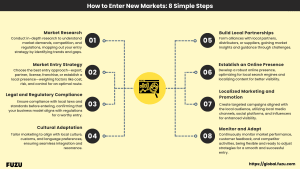
How to Enter New Markets: 8 Simple Steps

Embarking on the journey of entering new markets is like setting out on a well-planned road trip. Let’s delve into each step, providing a bit more detail to guide your way confidently.


  •  Market Research

Dive into extensive market research to truly understand the new market’s demands, the competitive landscape, and the regulatory environment. Identifying trends, customer behaviors, and market gaps is like mapping out the twists and turns of your journey. This groundwork ensures you tailor your entry strategy to align with the unique characteristics of the market.


  • Define Your Market Entry Strategy

As you plan your venture, consider the most suitable market entry strategy. Think about whether you want to export your goods, team up with local distributors, license your products, franchise your business, or establish a local presence through subsidiaries. Weigh factors such as cost, risk, and control, like deciding on the best route for your journey.


  • Legal and Regulatory Compliance

Follow the rules of the road – or in this case, local laws and regulations. Ensure your products or services meet local standards and certifications. This step is important and ensures that your business model is worthy and complies with all regulations before embarking on market entry. 


  • Cultural Adaptation

As you enter a new market, think about blending in seamlessly. Tailor your marketing and communication strategies to align with the local culture. Consider local customs, language preferences, and cultural sensitivities in your branding and messaging. 


  • Build Local Partnerships

Forge alliances with local partners, distributors, or suppliers. These local partnerships are like having travel companions who know the local terrain. They can guide you, help you navigate challenges, and provide insights into the nuances of the new market, making your journey smoother and more enjoyable.


  • Establish an Online Presence

Set up a robust online presence, optimizing your websites for local search engines. This is akin to creating a travel blog or a guidebook that resonates with the local audience. Localize your content to connect with the target audience and ensure they find you easily in the vast online landscape.


  • Localized Marketing and Promotion

Develop targeted marketing campaigns that align with the local audience. This step is similar to putting up billboards and signs along your route, ensuring that your message reaches the right people. Utilize local media channels, social platforms, and influencers for enhanced brand visibility and engagement.


  • Monitor and Adapt

Keep your eyes on the road and be ready to adapt. Continuously monitor market performance, customer feedback, and competitor activities.  Be flexible and ready to adjust your strategies based on the evolving dynamics of the new market, ensuring a smooth and successful entry.

Enter New Markets with Fuzu

In the realm of entering new markets, Fuzu emerges as an invaluable partner. Through our exceptional outstaffing services, Fuzu encapsulates many of the essential steps for new market entry into one comprehensive entity. With a talent pool of approximately 2.5 million professionals globally, Fuzu not only connects businesses with skilled individuals but also provides comprehensive training programs. Ensuring the right cultural fit, managing performance, and delivering high-quality work, Fuzu becomes a trusted guide in the intricate process how to enter new markets by providing a reliable workforce that can ensure your success. 

Conclusion

As the global business landscape expands, the potential of new markets beckons. The eight practical steps outlined serve as a blueprint for confident market entry, but for a streamlined and effective process, consider leveraging Fuzu’s outstaffing services. 


With Fuzu, not only do you gain access to a vast talent pool, but you also benefit from a partner that streamlines the complexities of new market entry. Seize the opportunity, embrace confidence, and propel your organization toward success in new markets with Fuzu’s outstaffing services. Your journey to new market triumph begins here.

6 Things to Consider Before Choosing an Outsourcing Partner

Image Source

In today’s highly competitive business environment, there are several crucial things to consider before choosing an outsourcing partner in order to achieve operational efficiency. This is where outsourcing emerges as a game-changing strategy that is reshaping the business landscape. It allows companies to entrust specific tasks to outsourcing partners, thereby liberating valuable resources for concentrating on their core strengths and areas of expertise. However, the pivotal element for the success of this strategy relies greatly on the selection of an outsourcing partner.

In this article, we will take a deep dive into the heart of strategic outsourcing, uncovering 6 things to consider before choosing an outsourcing partner. Additionally, we will introduce you to Fuzu, your trusted partner in outsourcing excellence. 

Outsourcing isn’t just about cost savings; it is a strategic decision with profound implications for your business. Whether you’re taking your first steps into outsourcing or contemplating a switch in providers, it’s imperative to assess potential partners meticulously. Your selection should effortlessly align with your business goals, enhance your in-house capabilities, and cultivate collaborative dynamics that lead to success.

The Essence of Strategic Outsourcing

Strategic outsourcing entails a purposeful and meticulously planned strategy for collaborating with an outsourcing partner. It supersedes the mere delegation of tasks and strives to generate added value for your organization.

 Here are the primary advantages of strategic outsourcing:

  • Cost Efficiency: By outsourcing, you can reduce operational costs, as you avoid the expenses associated with hiring and training in-house staff.
  • Access to Expertise: Outsourcing partners often bring specialized knowledge and skills to the table, enabling you to tap into their expertise.
  • Scalability: Outsourcing can be scaled up or down as needed, providing flexibility to adapt to changing business demands.
  • Risk Mitigation: Sharing responsibilities with an outsourcing partner can help distribute risks and ensure business continuity.

Having recognized the significance of strategic outsourcing, let’s now dive into six things to consider before choosing an outsourcing partner.

6 Things to Consider Before Choosing an Outsourcing Partner

  • Establishing a Foundation of Coordination 

When it comes to outsourcing, establishing a strong foundation for coordination with your outsourcing partner is pivotal for the success of your business. This process revolves around the cultivation of trust, alignment of goals, and the facilitation of seamless communication channels. When properly aligned, these components can serve as catalysts for heightened productivity, innovation, and the overall excellence of your organization’s operations.

  • Finding Balance Between Value and Cost

In today’s highly competitive business landscape, cost efficiency is undeniably important, but it should not come at the expense of quality and value. A reputable outsourcing partner should not only offer cost-effective solutions but also deliver high-quality services that add value to your business. Striking this balance ensures that you maximize the return on investment while maintaining the quality and reliability needed to foster a long-lasting and successful outsourcing relationship.

  • Prioritizing Scalability and Adaptability

Flexibility is the very foundation of successful outsourcing. Your outsourcing partner should have the capability and be well-equipped to accommodate your organization’s evolving needs. Assess their ability to expand the project as your business expands. Are they capable of adjusting and allocating resources efficiently as the workload grows? Scalability is crucial for a successful long-term partnership.

  • Meeting Deadlines and Upholding Commitments

Punctual delivery holds immense significance in the domain of outsourcing. Delays can put a  strain on partnerships and relationships. It’s essential to examine the vendor’s past performance regarding meeting deadlines for similar projects. They should demonstrate a consistent track record of on-time delivery while upholding the highest standards of quality and consistency.

  • Geographical Location and Cultural Awareness

The geographical location can have a significant impact on your outsourcing landscape. Consider the region where you intend to outsource and how differences in time zones could potentially enhance your traditional operating hours. Giving due regard to local regulations, cultural norms, and linguistic nuances that could impact the results will ascertain that your outsourcing strategy aligns seamlessly with your broader global expansion goals.

  • Effective Communication

Effective communication serves as the cornerstone of successful outsourcing. Your outsourcing partner should demonstrate exceptional communication and language proficiency. For instance, a situation that involves offshore teams communicating in various languages requires you to verify that your partner can promptly and clearly address any inquiries and concerns that come up. This will promote trust, transparency, and consequently the establishment of a smooth collaboration between your company and its stakeholders.

Fuzu’s Role in Supporting Your Outsourcing Journey

At Fuzu, we understand the intricacies of strategic outsourcing and pride ourselves in our commitment to helping businesses achieve their goals. Our track record stands as a testament, showcasing our esteemed reputation for consistently delivering customized outsourcing solutions across a wide array of industries.

Why Choose Fuzu as Your Outsourcing Partner?

With Fuzu Global Workforce as your outsourcing partner, you will be able to unlock a world of tailored, ethical, and efficient solutions, backed by a vast talent pool and a commitment to your success. We provide: 

  • Quality Talent:

Fuzu offers a diverse and highly skilled workforce that bring a wealth of expertise and capabilities from various industries to the table. With Fuzu, you can be assured of exceptional talent that will drive your organization’s success. 

  • Vast Talent Pool:

We provide an extensive talent pool of over 2.5 million professionals and we rigorously validate this large pool of reliable talent to provide the right skills and cultural fit. Our selection process includes testing and expert interviews, selecting professionals who align with your company’s values.

  • No Employer Hassles:

At Fuzu we handle employer responsibilities like contracting and payroll as your reliable outsourcing partner and free you to focus on your business.

  • Same Time Zone Advantage:

We provide access to English-speaking talent within two hours of any European time zone for seamless communication and collaboration.

  • Ethical Outsourcing Commitment:

Fuzu operates with respect for individuals and local labor laws, guaranteeing ethical practices that benefit clients and talent.

  • Satisfaction Assurance:

We continuously monitor and improve performance, prioritizing your satisfaction.

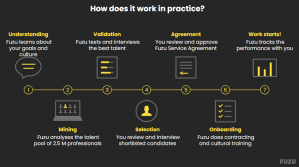
By choosing Fuzu, you not only gain access to a diverse and highly skilled talent pool but also benefit from our comprehensive approach that encompasses understanding your goals, rigorous selection, transparent agreements, ongoing performance monitoring, and seamless onboarding – all designed to make your outsourcing experience successful and hassle-free.

Conclusion

Selecting the right outsourcing partner is crucial for businesses aiming to boost efficiency and focus on core competencies. Things to consider before choosing an outsourcing partner include reputation, industry expertise, quality assurance, scalability, data security, communication, and cost alignment.

Fuzu is your reliable outsourcing partner, offering tailored services to fuel your organization’s growth. Contact us today to learn how we can guide you on your outsourcing journey.

A guide to hiring, onboarding, and managing payroll for global talent

Image source

There’s much to understand about hiring, onboarding, and managing payroll for global talent. With the rise of remote work and the ease of communication across borders, companies are increasingly looking beyond their own borders to tap into a diverse pool of talent. However, this expansion into the global talent pool comes with a myriad of complexities and considerations that can be daunting for even the most experienced HR professionals.

This article aims to simplify the complexities of hiring, onboarding, and managing payroll for global talent. These processes have a wide range of critical aspects, including salaries, benefits, taxes, levies, termination procedures, and compliance with ever-evolving employment laws. Navigating this sinuous landscape requires a thorough understanding of global hiring dynamics and a strategic approach to ensure success while minimizing risks.

In this article, we will look at: 

  1. The challenges and risks of hiring global talent
  2. Choosing a partner for hiring, onboarding, and managing payroll for global talent
  3. A checklist for companies hiring global talent

The challenges and risks of hiring global talent 

Hiring global talent expands your talent pool, enhancing your ability to attract and retain top performers in fiercely competitive markets, lowering operational costs, fostering workforce diversity, and ultimately boosting both productivity and employee engagement. However, there are some challenges and risks. Let’s review them below. 

  • Legal and compliance issues 

One significant challenge with global hiring talent is navigating the intricate landscape of legal and compliance matters such as employment laws, tax regulations, data protection guidelines, and social security systems in each country where you intend to hire your remote workers. Moreover, these regulations keep changing from time to time thus, the need to get an expert to handle your legal and compliance issues is paramount. 

  • Time zone variations 

Operating across various time zones can pose complex logistical and operational challenges for remote companies. This complexity can have a direct impact on both the productivity of the organization and the well-being of your employees, potentially resulting in increased stress and fatigue. 

  • Language and cultural differences 

Differences in language, varied communication styles, and differing norms, values, and expectations may lead to misunderstandings, misinterpretations, or conflicts within your team. This can potentially result in frustration, confusion, or resentment among your employees and may erode the trust and collaboration that is essential for effective teamwork.

Although hiring global talent can pose challenges for any growing business, you can successfully navigate these obstacles by aligning with the right partner to guide your global expansion. Let’s look at that in the next chapter. 


Choosing a partner for hiring, onboarding, and managing payroll for global talent

Working with the right global hiring partner changes everything. Hiring global talent is often seen as a complicated process, but, it doesn’t have to be. 

Fuzu Global Workforce makes it easy by providing you with services such as: 

  • Talent acquisition at globally competitive rates
  • Contracting and payroll management
  • Talent onboarding and continuous training 
  • Performance monitoring and cultural alignment

Fuzu Global Workforce is a global employment platform where European and US-based companies can hire remote employees without setting up subsidiaries or local infrastructure in other countries. The company is a subsidiary of Fuzu Ltd, A Finnish Company that has been running operations in Kenya since 2015. 

How does it work?


Fuzu has supported over 15 Million professionals to advance their careers through guidance and support. In addition to Kenya, Fuzu Ltd has its footprints routed in Nigeria and Uganda, making it a favourable partner for hiring African talent. 


By choosing Fuzu Global Workforce as your global hiring partner, you can rest assured that your onboarding and offboarding procedures will be in full compliance with global standards. 

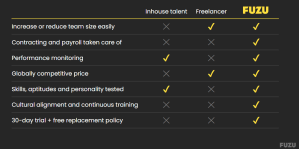
How does Fuzu compare with other global hiring solutions?

Let’s now compare three distinct approaches for fulfilling your talent needs: the in-house hiring process, engaging a freelancer for the task, and leveraging the Fuzu Global workforce platform as a solution for all your global hiring needs. By examining these three options, we can better understand the advantages, challenges, and implications associated with each approach, helping you make a well-informed decision that aligns with your specific talent acquisition goals.


A checklist for companies hiring global talent

By carefully considering each item on this checklist, you can ensure that no critical aspect of hiring a global team is overlooked. This proactive and systematic approach will not only streamline the process but also enhance your ability to create a successful and cohesive global workforce. 

Hiring & Onboarding 

  • Access to a deep talent pool
  • Time zone alignment
  • Language and cultural similarities
  • Testing and talent validation 
  • Training and onboarding
  • Talent management

Payroll management

  • Contracting and employment agreements 
  • Worker classification
  • Employee benefits such as insurance
  • Payroll accuracy 
  • Data and security protection 

Compliance 

  • Taxes and levies 
  • Termination laws
  • Local labour laws 


Get started with the right hiring, onboarding, and payroll management partner  

European-based companies in countries such as Finland, Sweden, Netherlands, Denmark, Norway, and the UK that are looking to expand their talent base by hiring global talent should contact Fuzu Global Workforce for their hiring, onboarding, and payroll management needs. 

Fuzu Global Workforce has designed the fastest, most cost-effective, and most compliant option for hiring global talent. 

Get in touch with us here. 

Employer of Record (EOR) Services for Small Businesses

Image Source

Employer of Record (EOR) services are becoming increasingly common for small businesses in Europe that want to expand their talent pool. 

Hiring African talent presents a remarkable opportunity to enhance your team’s value. However, hiring internationally can be very expensive and complex for European-based companies. As a result, the challenge of hiring internationally becomes increasingly difficult for small businesses in Europe looking to expand their workforce across borders.

So, what are the best Employer of Record (EOR) services for small businesses? We will highlight the top 5 companies that you can partner with if you are a small business looking to hire African talent, as well as manage payroll, tax compliance, and other HR support services. 

But first, how do you identify a good Employer of Record (EOR) service provider?


Characteristics of Good Employer of Record (EOR) Services

A good employer of record (EOR) should assist with taxes, payroll, employee benefits, and other tedious tasks involved in the process. This is what you should look out for when choosing an EOR partner to work with.

  • Comprehensive services

A good EOR service provider should offer an array of services including tax compliance, payroll management, talent acquisition, onboarding, HR support, and talent management. 

  • Value for money

Establishing separate entities to hire, manage staff and handle payroll across Africa can result in significant expenses and consume a substantial amount of time. By engaging a good EOR service provider, you avoid these unnecessary costs in each country in which you hire employees, thus getting value for your money. 

  • Compliance expertise

A good EOR service provider has an extensive understanding of compliance and labour laws and regulations. For example, in Nigeria, aside from registration with federal and state tax authorities, it is necessary to register with, and hold contributions for, the National Pension Commission, the Nigeria Social Insurance Trust Fund (NSITF), the National Housing Fund (NHF), and the Industrial Trading Fund (ITF).  A business attempting to fully comply on its own is at serious risk of penalties. A good Employer of Record can ensure full compliance with these requirements and becomes liable for non-compliance.


Why you should consider hiring African talent 

In the past ten years or so, Africa has emerged as a significant target for global growth. It’s often referred to as the potential “’next Asia” or “next India” when considering economic development and foreign investment. For instance, Kenya has purposely designed its economic approach to become an outsourcing hub for foreign investments. We’ve observed similar trends in Uganda and Nigeria as well. For this reason, there are several factors supporting the idea of bringing in and hiring African talent for your business.

  • Time zones

Working across different time zones can present a major challenge for remote companies. Fortunately, Africa shares relatively similar time zones with many European countries, greatly facilitating smoother collaboration.

  • English Accents

As a result of a British colonial past in many African countries, English is both an official language and one of the most commonly spoken languages. East African accents for example naturally sound closer to European accents. These accents are more acceptable in European contexts as they require little to no training to interact with customers or perform customer-facing roles

  • Education

Africa’s growing population is filled with highly skilled university graduates ready to enter the job market. These skilled professionals are well-equipped to take on a range of roles such as Software Development, Digital Content Specialists, Sales Representatives, and Virtual Assistants

Top 5 Employer of Record Service Providers for small businesses

Fuzu Global Workforce is a global employment platform where European companies can hire remote employees without setting up subsidiaries or local infrastructure in other countries. The company is a subsidiary of Fuzu Ltd, A Finnish Company that has been running operations in Kenya since 2015. Fuzu has supported over 15 Million professionals to advance their careers through guidance and support. In addition to Kenya, Fuzu Ltd has its footprints routed in Nigeria and Uganda, making it a favourable partner for hiring African talent. 

Their deep understanding of the local African market makes them the perfect EOR partner, providing services such as tax compliance, payroll management, talent acquisition, onboarding, HR support, and talent management while you focus on expanding your business. 

Fuzu Global Workforce provides Employer of Record (EOR) services in Kenya, Uganda, Nigeria, and other African countries. 

Skuad is a digital payroll platform for remote working teams. The Asian-founded platform is presently utilized by businesses in various countries across South East Asia, Africa, and North America.

Skuad provides Employer of Record (EOR) services in India, Mexico, Indonesia, the Philippines, and Nigeria. 

Workpay is an HR, payroll, and benefits platform that offers EOR services in Africa. For companies looking to hire onsite employees internationally, Workpay processes the required permits and visas according to jurisdictions.

Workpay provides Employer of Record (EOR) services across various countries in Africa. 

Globalization Partners is a company that helps you find, hire, and manage your workforce across the globe. In addition to providing EOR services, they also help with mobility through travel management, relocations, and visa and immigration support.

Globalization Partners provides Employer of Record (EOR) services across various countries including Japan, Brazil, China, and Hong Kong

NNRoad started as a local HR service provider in China and the USA and has since grown into a global leader in HR services. 

NNRoad provides Employer of Record (EOR) services in over 50 countries including China and Asia. 


Get started with an Employer of Record Service provider 

European-based companies in countries such as Finland, Sweden, Netherlands, Denmark, Norway, and the UK that are looking to expand their talent base by hiring African talent should contact Fuzu Global Workforce for their Employer of Record (EOR) service needs.  

Fuzu Global Workforce has designed the fastest, most cost-effective, and most compliant option for hiring African talent. 

Get in touch with us here. 

Get Global Talent Insights

Subscribe to our articles on building global, diverse remote teams.